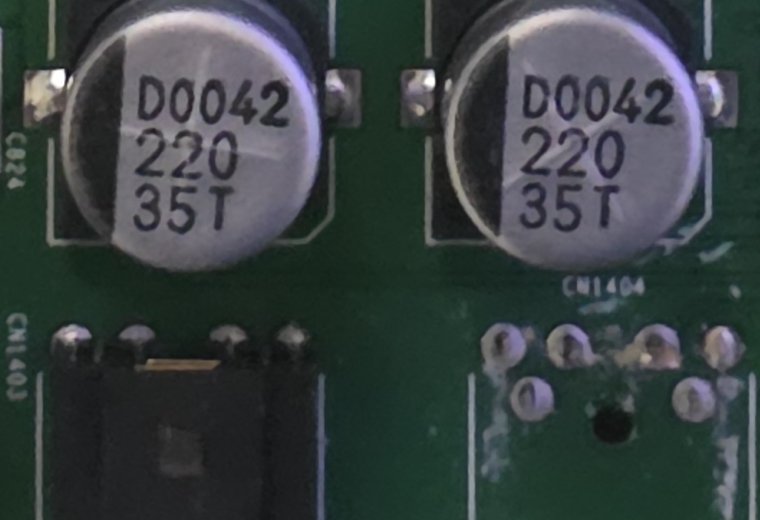
Photo: microscrapping.net
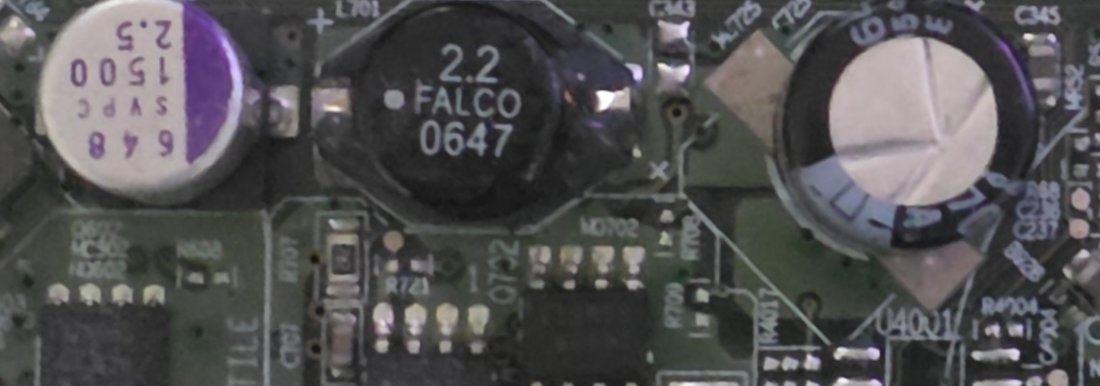
Photo: microscrapping.net
Drawn to true relative scale — the variants above are directly size-comparable.
Aluminium electrolytic capacitors
Vent score on top in a K, X, T or Y pattern, and a stripe down the sleeve marking the NEGATIVE lead — the opposite convention to tantalums.
How to spot it
Aluminium can in a coloured plastic sleeve: blue, black, brown, green, purple.
Metal content
| Metal | Quantity | Notes |
|---|---|---|
| Base metal | aluminium can | plus paper, foil and electrolyte — all contaminants |
Safe removal
Working temperature: Cold / preheat
Side cutters at the leads, or grip and twist after preheat. Most refiners pay the same with them on or off, so removing them usually wastes your time — check your buyer's spec first.
Hazards
NEVER short a large capacitor with a screwdriver. It welds the tip, blasts molten metal at your face, and can rupture the can.
Don't heat a capacitor directly with hot air at close range.
Before you scrap it
The common trap
Questions
How much gold is in aluminium electrolytic capacitors?
There is no meaningful recoverable precious metal in this item. Their real usefulness is as a grading signal : a board dominated by big electrolytics, transformers and heatsinks with few ICs is a low-grade board.
How do you identify aluminium electrolytic capacitors?
Vent score on top in a K, X, T or Y pattern, and a stripe down the sleeve marking the NEGATIVE lead — the opposite convention to tantalums.
How do you remove aluminium electrolytic capacitors safely?
Side cutters at the leads, or grip and twist after preheat. Most refiners pay the same with them on or off, so removing them usually wastes your time — check your buyer's spec first.
Is aluminium electrolytic capacitors worth more working than as scrap?
Specific vintage audio types (Black Gate, old Sprague) have a cult following.
Related in Capacitors
Get this offline → The full guide runs in your browser with no signal, and you can add your own photos.